

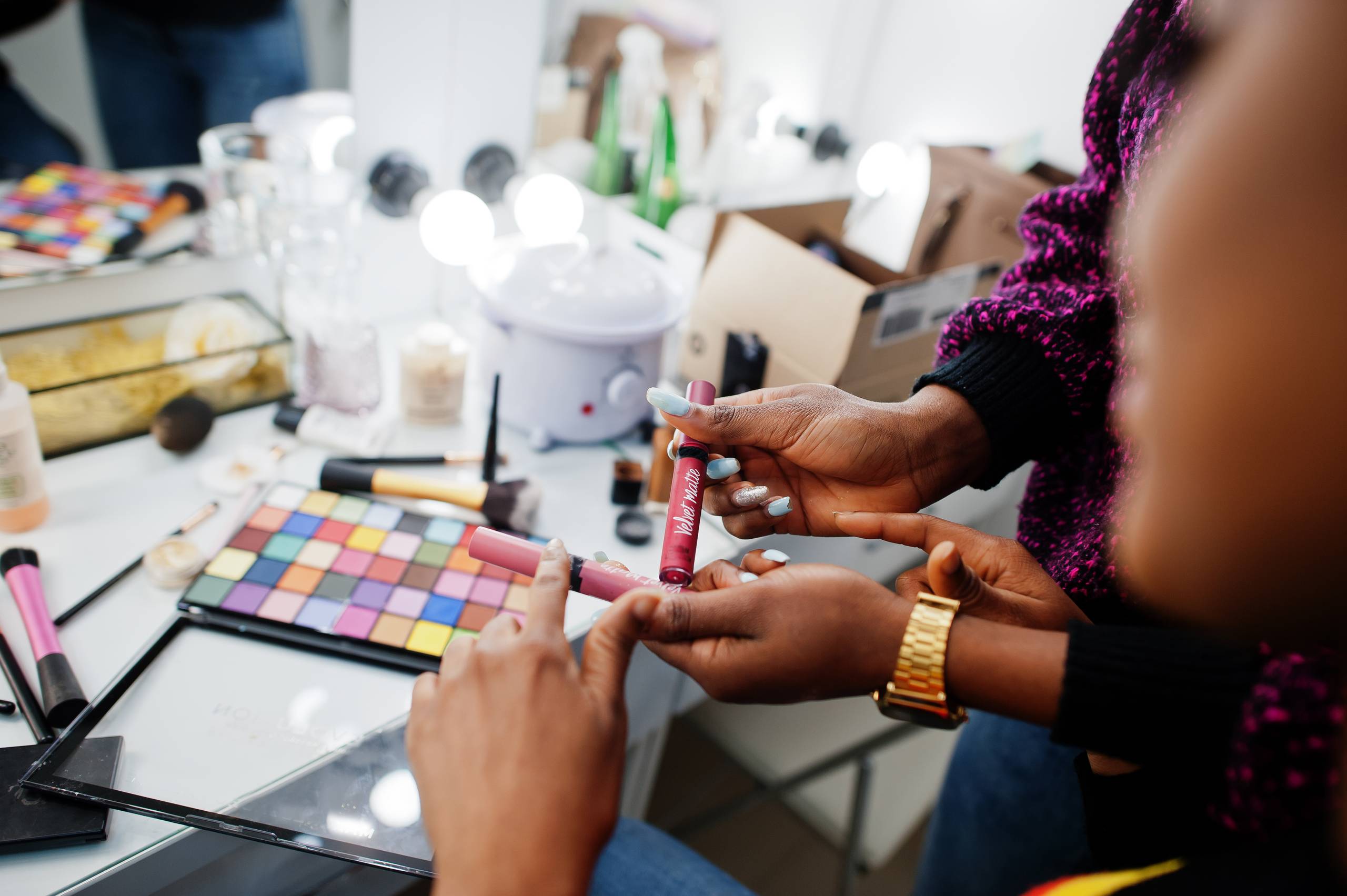
A clear comprehension of color theory takes your makeup application from hit or miss to specifically deliberate. In the simplest terms, color theory is essentially a tool that shows you what colors work well together (think contrast with complementary, cohesion with analogous, and energy with triadic). Then, you can use it to determine what eyeshadows to put on your eyes, where to place your blush, what color to put on your lips, and more. Colors that complement your undertones make your face look brighter and more lively and help you bring out your best features.
The foundation of determining what colors work well with you is skin undertones. If you have warm undertones (golden, peachy) you will look best in earth tones, such as terracotta, bronze, warm reds. Cool undertones (pink, blue, olive) look great in jewel tones, berry-stained lips and silver metallic. Neutral undertones can pull off both, but are typically best in colors with a balance of warmth and coolness. Always test colors on the jawline in natural light.
The best example of this is eye shadow. You can create a great everyday look with neutral shades of taupe, brown or champagne, and add in a fun twist with any other color. It’s always amazing how much nicer your eye color looks when you put the complementary shade on the opposite side of your eye (green on brown eyes, purple on green eyes, orange on blue eyes, etc). A smokey eye of analogous colors can make your eyes look amazing without looking like you’re trying too hard. The rule of thumb is that the brighter the shade, the smaller the surface area (or the more blended), and the more subtle the shade, the larger the surface area.
This same principle applies to lipstick shades, though each choice has an added significance to it. A shade that’s your natural color or just a tad bit deeper is sophisticated. Red is a bold statement. A cool-toned pink or mauve will make your face longer and your teeth whiter. A warm coral or brick will bring a pop of color to your complexion. Pairing your lip color with your blush and eyeshadow keeps everything cohesive. It looks like one full look rather than a face full of different features.
Once you have a firm understanding of these colour principles, you will gain the self-trust that comes from knowing that you have made the right decisions rather than using blind trial-and-error. With practice, you will internalize the principles to such an extent that you will find yourself shopping instinctively, and it will be second nature to look and feel great, and feel as though you look like “you.” It’s amazing how often you will find that you have nailed the look you want when you use the rules to your advantage and let them work for you.